
Update: Additional EIA Cases Confirmed in Adams and Weld Counties (as of February 3, 2026)
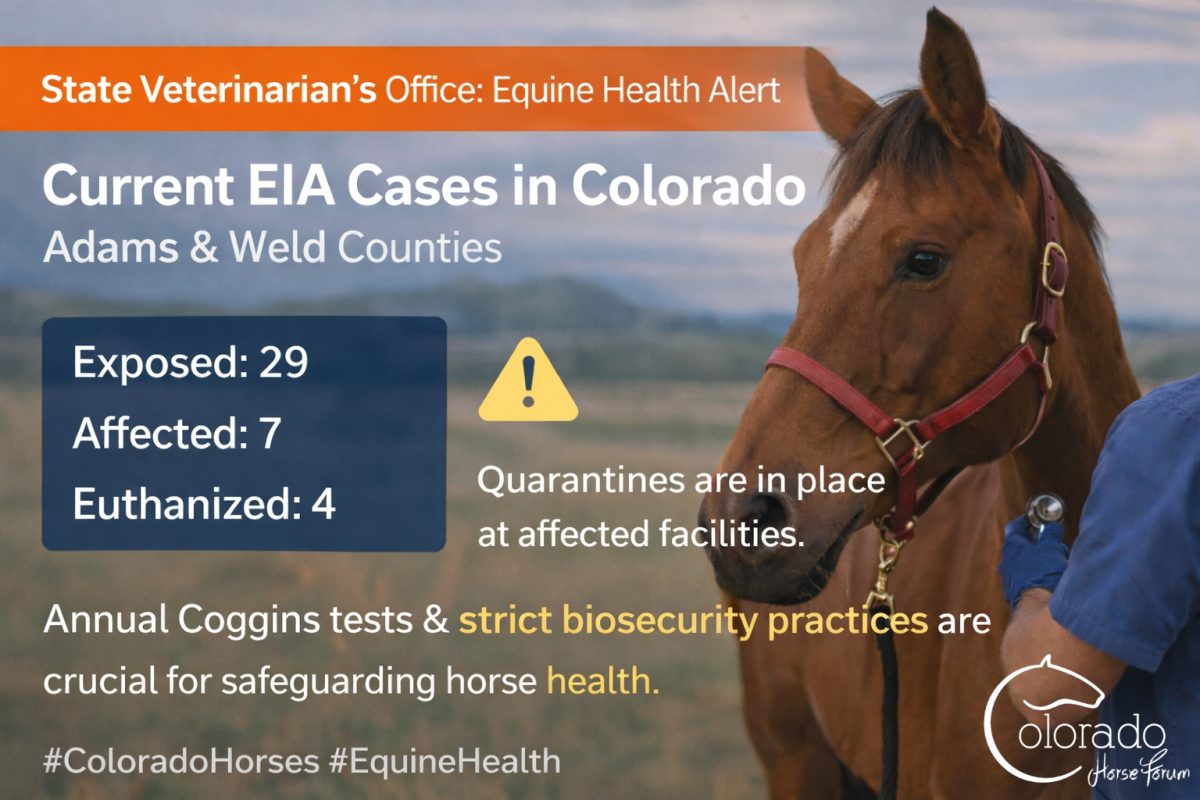
Since this article was first published, the Colorado State Veterinarian’s Office has reported additional confirmed cases of Equine Infectious Anemia (EIA) linked to training facilities in Adams County and Weld County, Colorado.
As of the most recent updates:
Adams County (Outbreak ID 7278 | Alert ID 4837 | January 12, 2026)
- Confirmed cases: 3
- Exposed horses: 11
- Euthanized: 3
- All confirmed horses were Quarter Horses used for racing. One additional affected horse was alive at the time of reporting.
Weld County (Outbreak ID 7315 | Alert ID 4861 | February 3, 2026)
- Confirmed cases: 4
- Exposed horses: 18
- Euthanized: 1
- All confirmed horses were Quarter Horses used for racing at a training facility. Testing was initiated due to known exposure to positive cases originating in Adams County.
These cases are epidemiologically linked through exposure at training facilities, and official quarantines are in place. Investigations remain ongoing, and additional testing of exposed horses continues.
Horse owners, trainers, and facilities are strongly encouraged to:
- Maintain current Coggins (EIA) testing
- Follow strict biosecurity practices
- Avoid sharing needles, syringes, or IV equipment
- Work closely with their veterinarian if exposure is suspected
This article will continue to be updated as new, confirmed information becomes available.
Original December Article Below
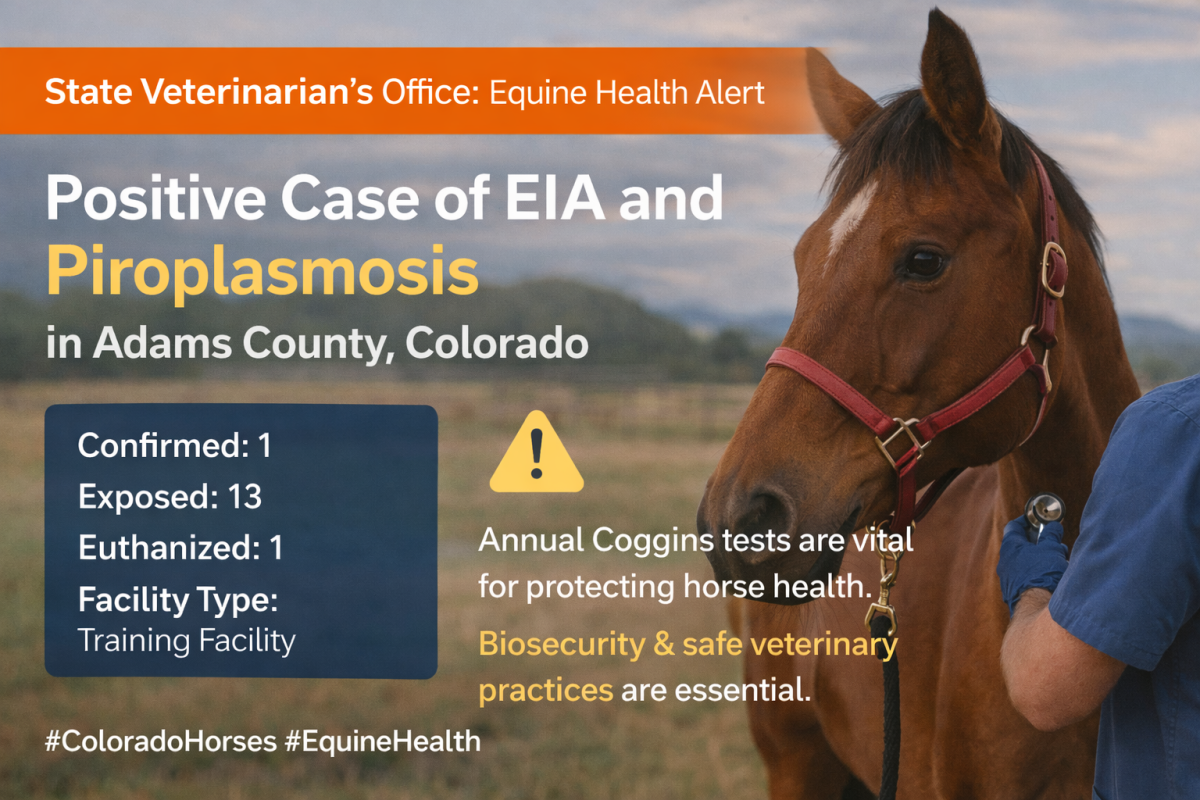
The Colorado State Veterinarian’s Office has confirmed one positive case of Equine Infectious Anemia (EIA) and Piroplasmosis in Adams County, Colorado.
Case Summary
- Facility Type: Training Facility
- Number Confirmed: 1
- Number Exposed: 13
- Number Euthanized: 1
Horse Details
- Age: 5
- Gender: Mare
- Breed: Quarter Horse
- Use: Match Racing (unsanctioned bushtrack racing)
- Clinical Signs: Unthrifty, poor body condition
- Reason for Testing: Interstate movement
- Confirmation Date: December 23, 2025
- Outcome: Euthanized
The mare was tested as part of routine requirements for interstate movement, which is how both diseases were identified.
Additional Horses Under Investigation
Confirmatory testing for exposed cohort horses is currently pending, with four horses suspected to be positive for one or both diseases. Updates will be provided as additional results become available.
Likely Source of Transmission
According to the trainer, the most likely source of disease transmission was the reuse of an IV catheter or equipment between horses, highlighting the critical importance of strict biosecurity and single-use medical supplies.
Why This Matters
Both EIA and Piroplasmosis are serious, reportable diseases that can have long-term impacts on individual horses and the broader equine population. While cases are rare, they underscore the importance of routine testing, safe veterinary practices, and responsible horse management.
A Reminder on EIA Testing
Annual EIA testing (Coggins testing) remains one of the most important tools we have to protect equine health. Regular testing helps identify infections early, prevent spread, and safeguard our horse communities—especially where horses travel, train, or commingle.
Horse owners, trainers, and facilities are encouraged to work closely with their veterinarians to maintain appropriate testing schedules and biosecurity protocols.
We will continue to share updates as more information becomes available from the State Veterinarian’s Office.

Author: Una
Una moved to Colorado in 2007 and started the Colorado Horse Forum as a way to meet other equestrians in the area. Una now rides and competes in dressage. She operates a small dressage horse breeding program in Castle Rock.


Leave a Reply
You must be logged in to post a comment.