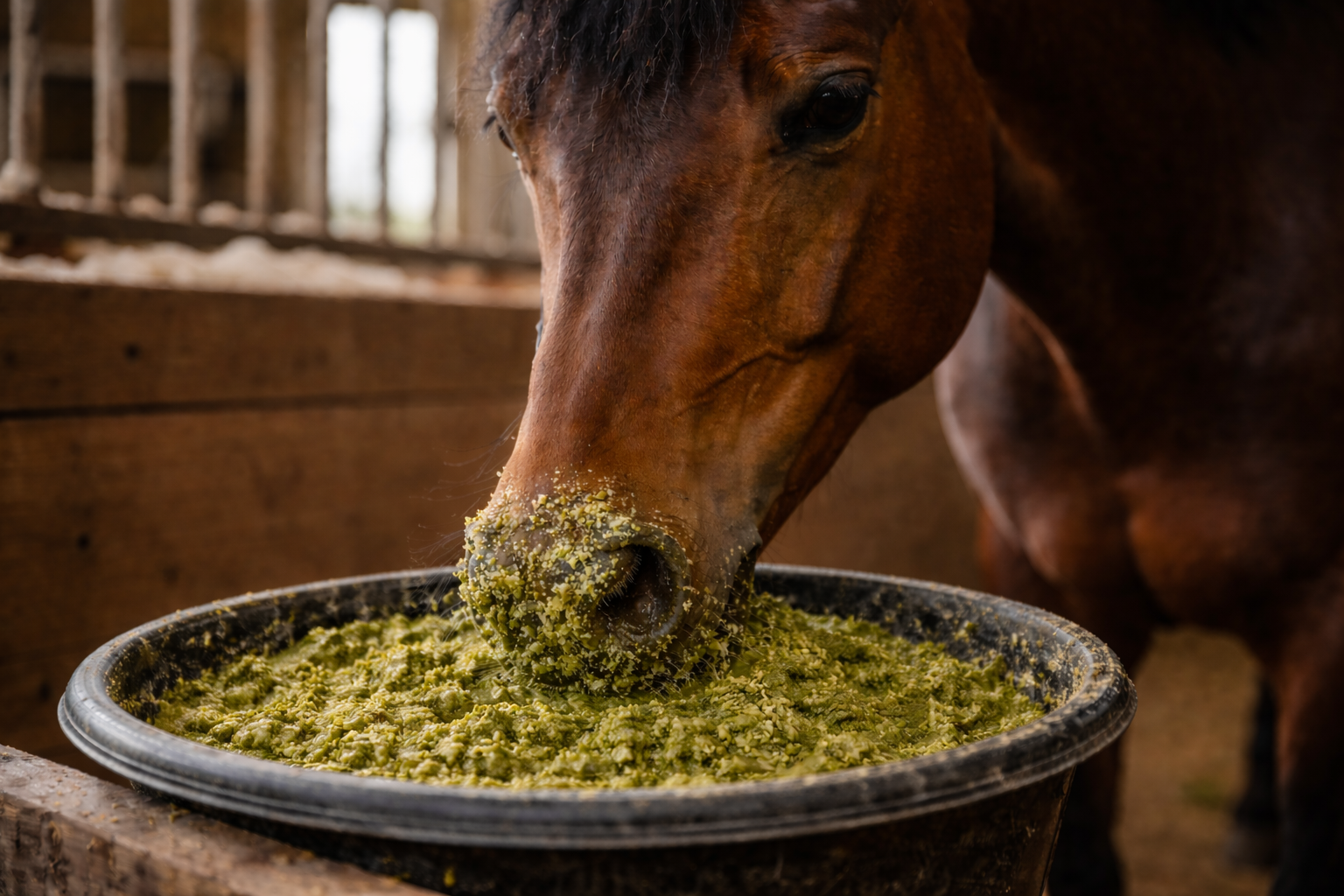

Adding water to feed—whether through soaked concentrates, beet pulp mashes, or wet hay—is a common management strategy in the horse world. It’s often recommended to support hydration, particularly in winter, during travel, or for horses that are poor drinkers. But while this practice is widespread, the science behind how soaking feed affects overall water intake is more nuanced than many people realize.
Recent research helps clarify when soaking feed is helpful, when it may not change hydration at all, and why season, feed type, and hay management all matter—especially for horse owners in Colorado’s cold, dry climate.
How Horses Regulate Water Intake
Horses are remarkably good at maintaining fluid balance. When environmental conditions are comfortable and water is readily available, they naturally adjust how much they drink based on moisture coming from other sources, including feed.
This concept was explored in depth in a 2025 study by Ferreira et al., which examined how soaking different types of concentrates influenced drinking behavior and hydration status in horses (Ferreira et al., 2025).
What Happens When Concentrates Are Soaked in Mild Conditions?
In the Ferreira, N., D. Binder, I. Hernandez Garbati, J.M. Lance, and L.K. Warren (2025) study, six mature Quarter Horse geldings were fed one of three common concentrate types—pelleted commercial feed, timothy-alfalfa hay cubes, or shredded beet pulp—along with Bermudagrass hay. Each concentrate was fed dry for several days and then soaked at a 2:1 water-to-feed ratio for the remainder of the feeding period. Ambient temperatures averaged around 55°F (13°C), similar to Colorado’s fall or spring conditions.
The researchers closely measured:
- Voluntary water intake (how much the horses drank)
- Total water intake (drinking water + water added to feed + natural feed moisture)
- Feed intake and fecal moisture
Key findings:
- When feed was soaked, horses immediately reduced how much they drank
- This reduction began on the first day soaked feed was introduced
- Water added to feed accounted for about 18% of total daily water intake
- Total water intake remained essentially the same whether feed was dry or soaked
- Hydration indicators, including fecal moisture, did not change
In short, when temperatures were moderate, horses compensated for the extra water in their feed by drinking less. Soaking feed shifted the source of water, but did not increase overall hydration.
The study also showed that horses fed hay cubes drank more total water than those fed pellets or beet pulp, highlighting that feed type influences drinking behavior, even when total hydration remains regulated.
Cold Weather Changes the Outcome
Season plays a critical role in hydration, which is particularly relevant for Colorado horse owners.
A study by Rucker NK, Hiney KM. (2013) evaluated water intake in horses during fall versus winter in Wisconsin, with winter temperatures ranging from -4°F to 33°F—conditions that closely mirror many Colorado winters.
The researchers found:
- Horses drank less water in winter than in fall
- Average intake dropped from 29.3 L/day in fall to 24.7 L/day (1.215 gallon drop) in winter
- This aligns with previous research showing a 6–12% seasonal decline in winter water intake
However, when soaked feed was introduced during winter, the results shifted.
Horses fed a mash in winter consumed more total water than those fed dry feed—by approximately 1.2 gallons per day. Importantly, they did not fully compensate by drinking less, meaning the water added to the mash helped offset the seasonal decline in voluntary drinking.
This suggests that in cold conditions—when thirst drive is reduced—soaked feeds can play a meaningful role in maintaining hydration.
What About Soaked or Steamed Hay?
Hydration discussions often focus on concentrates, but hay management matters too—especially for stalled horses or those with respiratory concerns.
A 2023 study by Oberlin, C., K. Hay, and H.M. Pyles. evaluated water intake in horses fed dry hay compared with soaked or steamed hay. The study found that:
- Horses fed dry hay drank more water than those fed soaked or steamed hay
- Dry matter intake did not differ between treatments
- There was a positive relationship between dry matter intake and water intake
- Fecal moisture was influenced by both feed intake and water consumption
In other words, soaking or steaming hay did not increase total water intake and, in some cases, was associated with lower drinking. The authors emphasized that water management becomes even more important when feeding treated hay and that horses need time to adapt when hay type or preparation changes.
What This Means for Colorado Horse Owners
Taken together, these studies paint a clear, practical picture:
- Horses self-regulate hydration effectively in mild conditions
- Soaking feed does not automatically increase total water intake
- In cold winter weather, when horses naturally drink less, soaked feeds can help counteract seasonal declines
- Feed type and hay preparation influence drinking behavior
- Soaked feeds are most helpful for:
- Winter management
- Poor drinkers
- Horses at higher risk for dehydration or impaction colic
For Colorado horse owners dealing with frozen tanks, dry air, and long winters, warm mashes can be a valuable seasonal tool, but they’re not a year-round hydration solution.
The Bottom Line
Soaking feed is not a one-size-fits-all answer to hydration. In comfortable temperatures, horses adjust their drinking to maintain balance. In cold weather—when voluntary water intake drops—soaked feeds can meaningfully increase total water consumption and support gut health.
Understanding when and why to soak feed allows horse owners to use this practice strategically rather than automatically.
References
Ferreira, N., D. Binder, I. Hernandez Garbati, J.M. Lance, and L.K. Warren. 2025. Effect of soaking feed on water intake and hydration in horses. Journal of Equine Veterinary Science 148:105449.
Rucker NK, Hiney KM. Voluntary water intake in horses when fed a dry versus mash grain in two different seasons. Journal of Equine Veterinary Science. 2013;33(5):355–356.
Oberlin, C., K. Hay, and H.M. Pyles. 2023. Feeding steamed or soaked hay affects water intake and preference compared to dry hay. Journal of Equine Veterinary Science:104364.

Author: Una
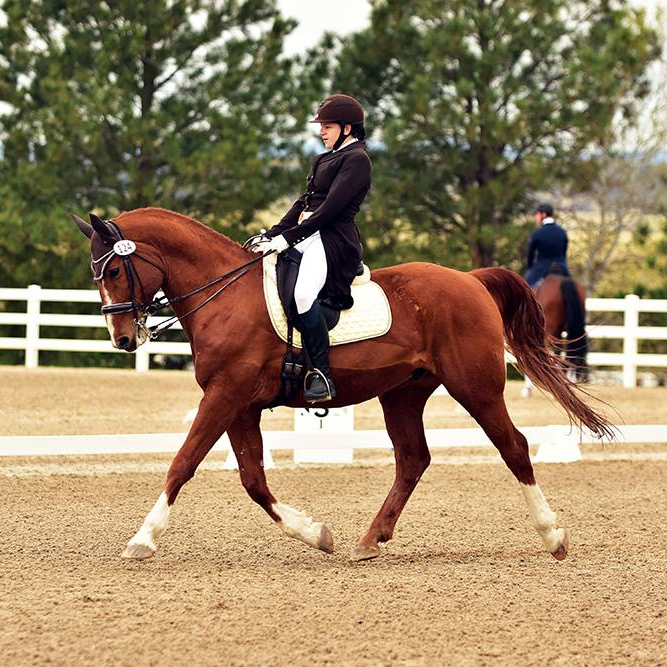
Una moved to Colorado in 2007 and started the Colorado Horse Forum as a way to meet other equestrians in the area. Una now rides and competes in dressage. She operates a small dressage horse breeding program in Castle Rock.


Leave a Reply
You must be logged in to post a comment.