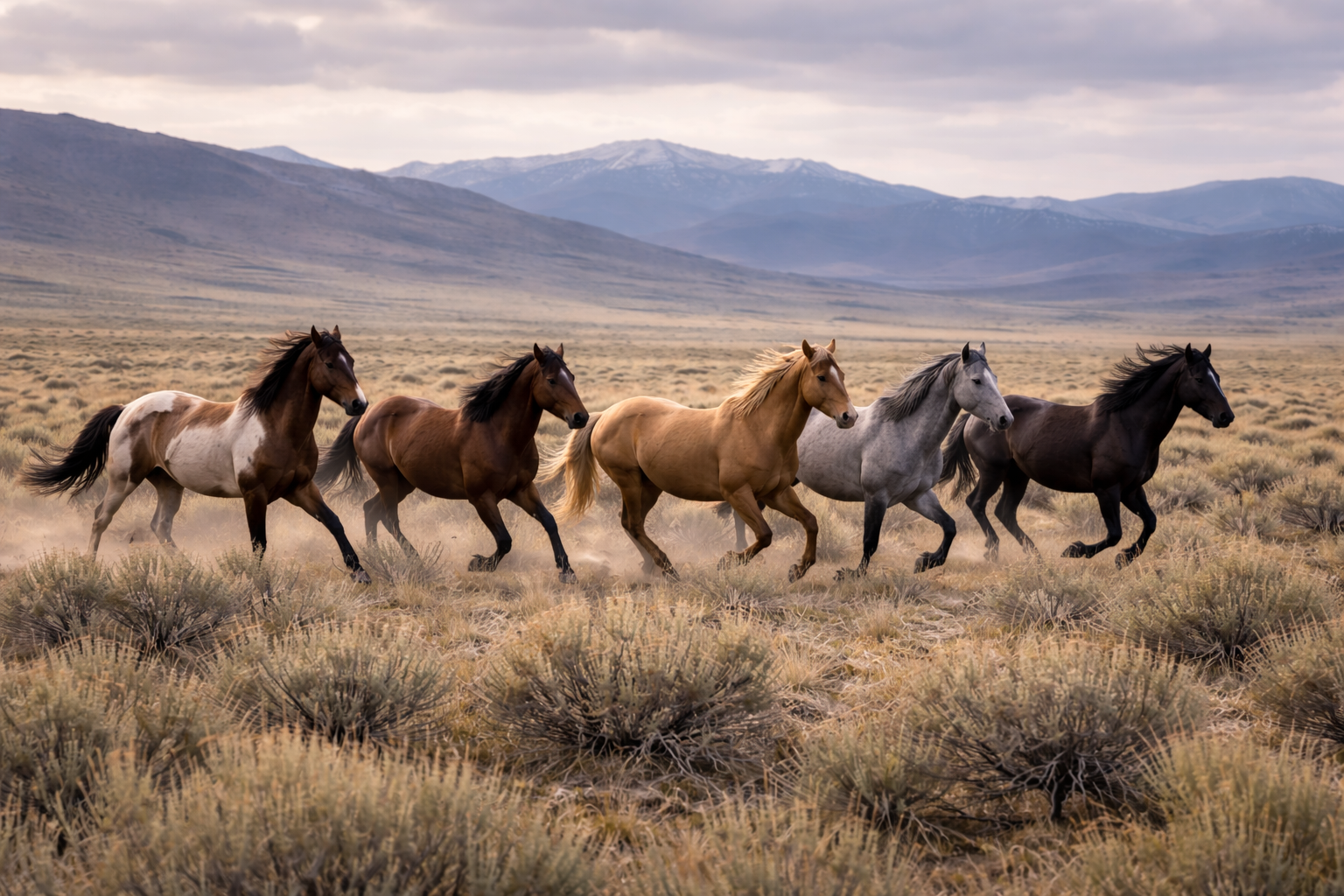

The Bureau of Land Management (BLM) has announced a broader use of its Wild Horse and Burro sales authority, a move that significantly changes how ownership of federally protected animals may transfer into private hands.
Under the updated approach, qualified individuals and organizations can purchase wild horses and burros outright, with ownership transferring immediately at the point of sale. While the agency describes the program as an opportunity to place animals into private care, the policy shift has raised renewed concerns about animal welfare protections, transparency, and long-term accountability.
How the Sales Expansion Works
BLM has long operated both adoption and sale programs for excess wild horses and burros removed from public lands. Under the expanded sales framework:
- Animals are sold with immediate title transfer, rather than after a waiting or probationary period
- Once ownership changes, no federal follow-up inspections or welfare checks are required
- Buyers may acquire up to four animals at once, with an option to request approval for larger group purchases
- Sales are promoted alongside adoption but do not include the same safeguards
In effect, the moment a sale is finalized, the federal government no longer has authority over the animal’s care, transfer, or future disposition.
Why Immediate Title Transfer Raises Red Flags
Adoption programs historically required a minimum care period before ownership transferred, allowing some level of oversight and intervention if animals were neglected or mismanaged. By contrast, immediate title transfer removes that checkpoint entirely.
Advocates point out that even with adoption requirements in place, oversight gaps have occurred in the past. Eliminating post-placement monitoring altogether heightens concern that animals could be moved, resold, or otherwise lost from accountability systems with little ability for recovery or enforcement.
The issue is compounded when animals are sold in groups, as large-scale transactions have historically proven more difficult to track and regulate.
Policy Timing and Broader Context
The announcement comes on the heels of a federal court decision that halted BLM’s Adoption Incentive Program (AIP), which had drawn criticism for encouraging rapid placement without sufficient safeguards. That ruling underscored broader concerns about how incentive-based programs may unintentionally expose animals to harm.
In this context, the expanded use of sales has prompted questions about whether the agency is addressing the root problems identified by the court—or simply shifting to another mechanism that reduces federal responsibility without strengthening protections.
Stewardship and Public Responsibility
Wild horses and burros occupy a unique legal and cultural status. Federal law recognizes them as symbols of the American West and assigns the government a duty to manage them humanely on behalf of the public.
While BLM requires prospective buyers to complete an application and certify intent to provide humane care, those assurances end once a sale is complete. Unlike adoption agreements, sales carry no enforceable post-transfer standards, inspections, or reporting requirements.
As sales become a more prominent management tool, the public is left with unanswered questions:
- Will safeguards be added to ensure animals remain protected after purchase?
- Will buyers who acquire multiple animals be subject to any form of oversight?
- How does the expanded reliance on sales align with recent legal scrutiny of wild horse management practices?
Cost Savings vs. Welfare Safeguards
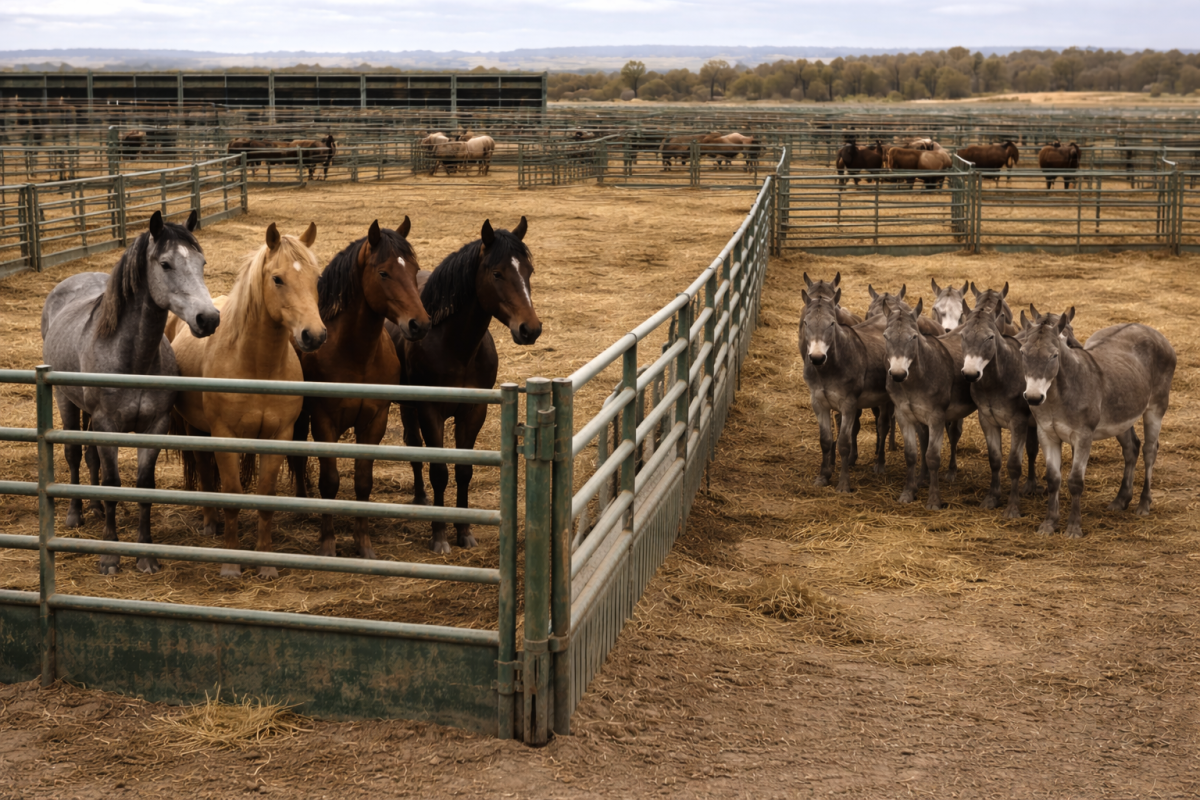
BLM has emphasized the financial burden of caring for tens of thousands of wild horses and burros in off-range facilities, citing annual costs exceeding $100 million. The agency estimates that placing animals into private ownership can significantly reduce long-term taxpayer expense.
Critics do not dispute the fiscal challenge, but argue that cost reduction alone cannot justify removing oversight from a federally protected population. They maintain that financial efficiency must be balanced with enforceable standards that ensure humane treatment beyond the point of sale.
Looking Ahead
There is broad agreement that many wild horses and burros can thrive in private homes, ranches, and training programs when matched with responsible caretakers. The debate centers not on private placement itself, but on whether expanded sales without post-transfer accountability meet the government’s obligation to protect these animals.
Advocacy organizations, including The Cloud Foundation, have stated they will continue to monitor the policy shift and push for management strategies that prioritize transparency, humane treatment, and long-term accountability—both on and off public lands.
Have thoughts on this policy change or insight to share from your own experience? We encourage respectful discussion and invite you to drop your perspectives, questions, or concerns in the comments below.
Source:
BLM Announcement, January 12, 2026
https://www.blm.gov/announcement/blm-highlights-individual-and-group-sales-wild-horses-and-burros

Author: Una
Una moved to Colorado in 2007 and started the Colorado Horse Forum as a way to meet other equestrians in the area. Una now rides and competes in dressage. She operates a small dressage horse breeding program in Castle Rock.



Leave a Reply
You must be logged in to post a comment.