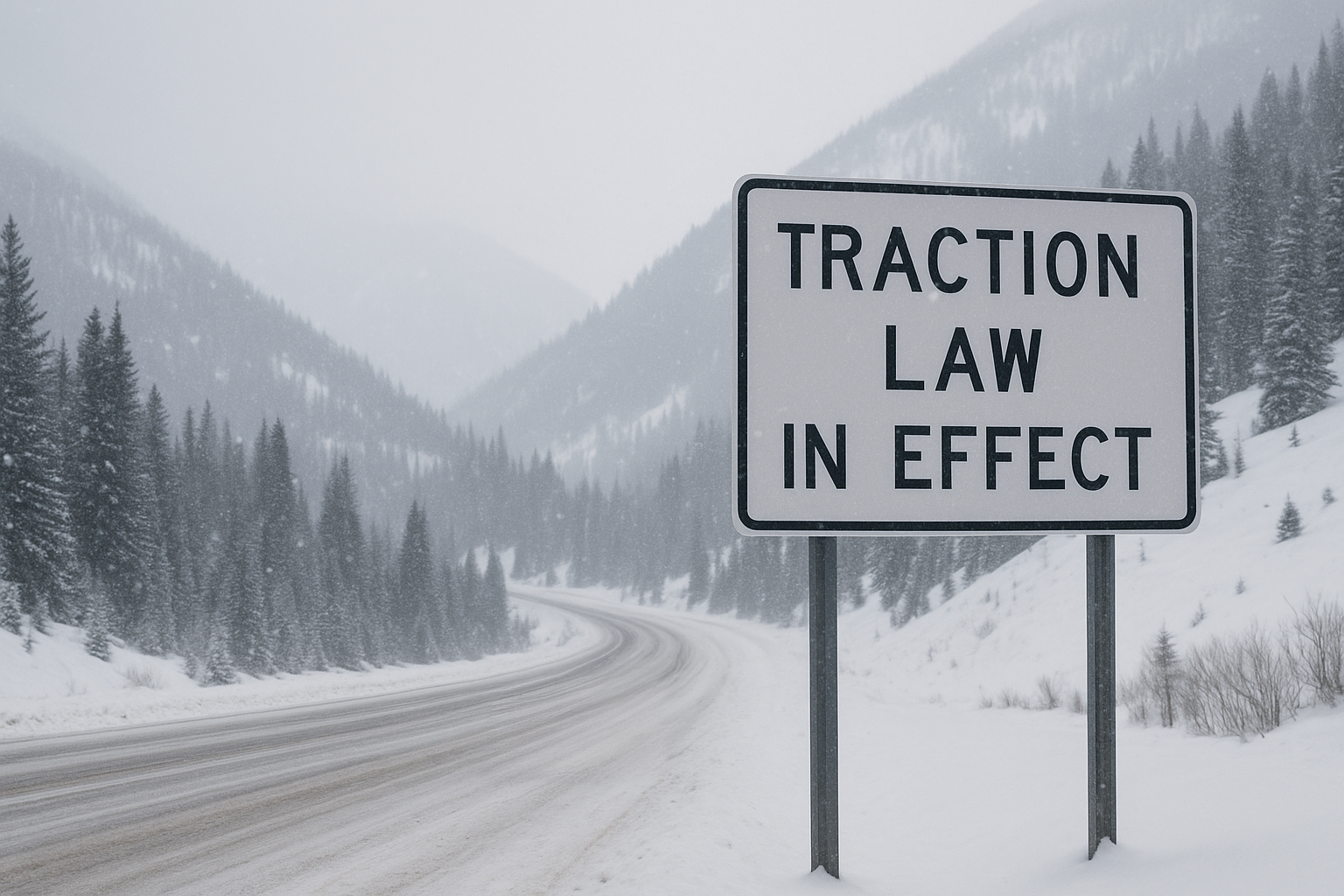

Colorado winters can be unpredictable—sunny one minute, white-out conditions the next. For those of us hauling horses, heading to the barn, or navigating rural roads, understanding Colorado’s updated Traction Laws is essential for staying safe and avoiding costly fines.
When weather conditions warrant, CDOT (Colorado Department of Transportation) may activate Traction or Chain Laws on any state highway. These go into effect to keep roads passable and reduce accidents during snow and ice events. Motorists are notified via highway signage, COtrip.org, and roadway condition alerts.
Here’s what Colorado horse owners and barn commuters need to know.
Passenger Vehicle Traction Law (Updated Fall 2025)
During winter storms—or whenever road conditions require—CDOT may implement the Passenger Vehicle Traction Law.
Under this law, all passenger vehicles must meet one of the following requirements:
Acceptable Traction Setups
- AWD/4WD with tires designated as Mud and Snow (M+S) AND at least 3/16” tread, OR
- AWD/4WD with winter tires marked with the mountain-snowflake icon AND at least 3/16” tread, OR
- AWD/4WD with a manufacturer-designated all-weather rating AND at least 3/16” tread, OR
- Any vehicle (AWD, 4WD, FWD, or RWD) equipped with chains or an approved alternative traction device.
Yes, that means it’s not just commercial trucks that need to comply. Front-wheel-drive and rear-wheel-drive vehicles must use chains or an approved traction device.
Passenger Vehicle Chain Law (Severe Storm Activation)
When conditions become especially hazardous, CDOT may escalate to the Passenger Vehicle Chain Law, which is the final step before a full highway closure.
If this law is in effect:
Every vehicle—regardless of drivetrain—must have chains or an approved alternative traction device installed.
Fines for Non-Compliance
Ignoring traction laws isn’t just dangerous—it’s expensive.
- $50 fine + $17 surcharge for violating Traction or Chain Law requirements.
Being prepared is far cheaper than being cited—or getting stuck.
Winter Driving Checklist for Colorado Horse Owners
Before hitting the road (especially if you’re hauling horses), make sure all of these essentials are in safe working condition:
- Windshield wiper fluid
- Heater and defroster
- Wiper blades
- Radiator/antifreeze
- Exterior and interior lights
- Fuel system with a full tank
- Tires with at least 3/16-inch tread
- A Good Battery
- Safe Brakes
Preparedness is your best defense against winter emergencies—whether you’re heading to the barn, hauling to a clinic, or driving mountain passes.
Stay Updated
- Sign up for CDOT text alerts: https://subscription.cotrip.org/
- View CDOT’s approved traction device list: https://apl.codot.gov/
Stay safe, stay prepared, and take care of both yourself and your horses on Colorado’s winter roads. If you’ve had experience driving in a Traction or Chain Law situation, feel free to share tips with the community in the comments below!

Author: Una
Una moved to Colorado in 2007 and started the Colorado Horse Forum as a way to meet other equestrians in the area. Una now rides and competes in dressage. She operates a small dressage horse breeding program in Castle Rock.



Leave a Reply
You must be logged in to post a comment.