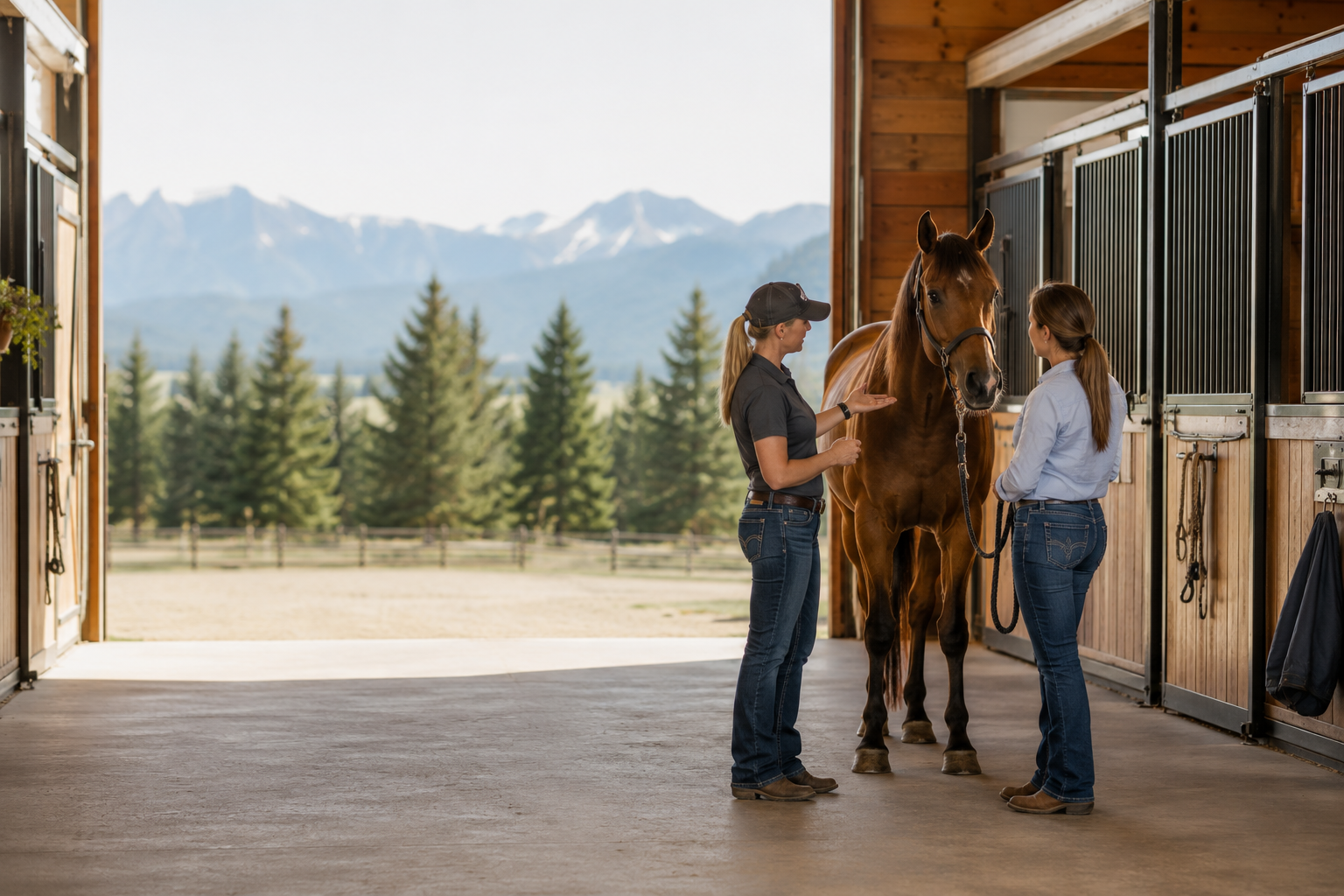


Choosing a horse trainer is one of the biggest decisions you’ll make as a horse owner. Whether you’re sending a young horse out for its first rides, trying to improve your own riding, or preparing for competition, the person you trust with your horse becomes an important part of your team.
The right trainer can help your horse develop confidence, improve performance, and make the entire ownership experience more enjoyable. The wrong fit, however, can lead to frustration, miscommunication, unmet expectations, and in some cases, unsafe situations.
One of the biggest misconceptions horse owners have is believing they’re simply hiring someone to ride or teach their horse. In reality, you’re entering into a professional relationship that requires communication, trust, honesty, and shared goals.
Finding the right trainer isn’t about finding the “best” trainer—it’s about finding the best trainer for you and your horse.
This is the first article in our series on choosing the right trainer. Throughout this series, we’ll walk you through every step of the process—from finding the right trainer and building a successful partnership to being a great client, setting realistic expectations, and navigating challenges professionally if things don’t go as planned.
Before You Ever Call a Trainer, Define Your Goals
Before researching trainers or touring facilities, take some time to honestly evaluate what you’re hoping to accomplish.
Ask yourself:
- Is my goal to enjoy safe trail rides?
- Do I want to compete?
- Am I starting a young horse?
- Am I looking for help solving a behavioral problem?
- Am I wanting lessons for myself?
- Do I eventually want to ride independently?
These questions matter because a trainer who excels at preparing FEI dressage horses may not be the ideal choice for a family trail horse. Likewise, a trainer known for starting ranch horses may not be the best fit for someone pursuing hunter/jumpers.
The clearer your goals are, the easier it becomes to identify someone whose experience aligns with your needs.
Experience Is More Than Years in the Industry
It’s easy to ask, “How long have you been training?”
A better question is:
“What types of horses and riders do you spend most of your time working with?”
Someone may have twenty-five years of experience, but almost all of it could involve restarting problem horses. Another trainer may have only ten years of professional experience but specializes in developing successful amateur riders.
Neither is automatically better.
Look for someone whose daily work resembles what you hope to accomplish.
A Good Teacher Isn’t Always the Same as a Good Rider
This is one of the most overlooked aspects of choosing a trainer.
Some exceptional competitors struggle to explain concepts to students.
Meanwhile, some trainers who never compete at the highest levels are phenomenal educators.
If you’re taking lessons, pay close attention to how the trainer teaches.
Do they explain why you’re doing something?
Do they adjust their communication style if you aren’t understanding?
Do they celebrate progress instead of constantly focusing on mistakes?
The best instructors teach people—not just horses.
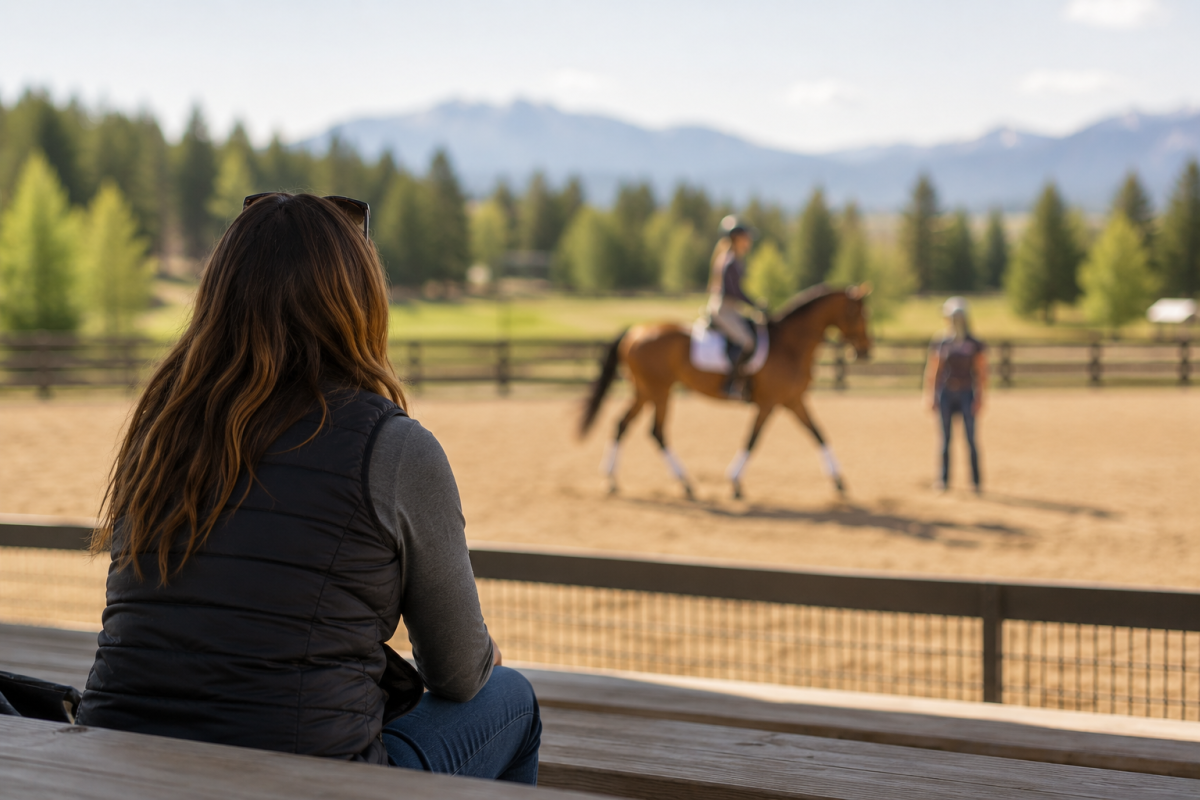
Watch Before You Commit
If possible, spend an afternoon observing.
Watch several lessons.
Watch different horses.
Watch beginners.
Watch advanced riders.
Notice whether the trainer remains calm when something goes wrong.
Observe how horses respond when the trainer enters the barn.
Relaxed horses aren’t necessarily perfectly behaved horses—but they generally indicate thoughtful, consistent handling.
Talk to Current Clients
One of the best ways to learn about a trainer is by speaking with the people already working with them.
Rather than asking, “Do you like your trainer?” ask questions like:
- How often do you receive updates?
- Has your horse progressed?
- Is communication timely?
- How is the horse’s care?
- Does the trainer work the horses regularly?
- Have there been any surprises with billing?
- Would you choose this trainer again?
- Have there been any pain points?
No trainer will satisfy every client, but consistent themes often tell an accurate story.
Communication May Matter More Than Training Ability
Even outstanding trainers can become poor fits if communication styles don’t align.
Discuss expectations before your horse ever unloads.
Some helpful questions include:
- How often should I expect updates?
- Do you send videos?
- Can I visit whenever I’d like?
- What happens if my horse becomes injured?
- Who makes veterinary decisions in an emergency?
- How are unexpected expenses handled?
Clear expectations prevent many misunderstandings later.
Understand the Business Side
Professional horse training is both horsemanship and business.
Before committing, understand:
- Monthly training costs
- Board fees
- Farrier schedule
- Veterinary responsibilities
- Medication policies
- Cancellation terms
- Notice requirements
- Insurance expectations
- Ride/Training schedule
Don’t assume.
Ask.
Good trainers appreciate informed clients.
Red Flags Worth Paying Attention To
No trainer—or client—is perfect. One negative review or one difficult situation doesn’t necessarily indicate a poor professional.
However, patterns deserve attention.
Consider asking additional questions if you notice:
- No written policies or contracts
- Consistently poor communication
- Frequent unexplained injuries
- Horses appearing underweight or neglected
- Pressure to make quick decisions
- Unwillingness to answer reasonable questions
- A barn culture built around gossip or drama
- Promises of guaranteed results
Be especially cautious of anyone who claims they can “fix any horse.”
Every horse is an individual, and ethical trainers understand there are no guarantees.
Don’t Ignore the Barn Atmosphere
Some of the best trainers operate from modest facilities.
Some beautiful facilities have poor management.
Instead of focusing solely on the arena, ask yourself:
Do the horses appear comfortable?
Is the environment calm?
Are clients treated respectfully?
Would you enjoy spending time there?
You’ll likely spend many hours at this barn.
Make sure it feels like somewhere you want to be.
Trust Your Instincts—But Verify Them
Sometimes something simply feels off.
That doesn’t automatically mean the trainer is doing anything wrong.
Likewise, a polished social media presence doesn’t always reflect daily operations.
Use your instincts as a signal to ask more questions—not as your only source of information.
Gather facts.
Observe.
Talk to people.
Then make your decision.
Finding the Right Fit Takes Time
The best trainer for your neighbor may not be the best trainer for you.
Your goals, personality, communication style, budget, and horse all influence whether a partnership will succeed.
Take your time.
Ask questions.
Visit multiple barns.
Most importantly, remember that choosing a trainer isn’t just about today’s goals—it’s about building a relationship that helps both you and your horse continue learning for years to come.
A great trainer doesn’t simply improve horses. They help owners become more confident, knowledgeable horsemen and horsewomen.
Coming Up Next in This Series
Touring a Training Barn: What Should You Actually Look For?
We’ll walk through exactly what to watch for when visiting a potential training facility—including horse condition, turnout, feeding, safety, barn culture, and the subtle signs that often tell you more than a trainer’s résumé ever will.

Author: Una
Una moved to Colorado in 2007 and started the Colorado Horse Forum as a way to meet other equestrians in the area. Una now rides and competes in dressage. She operates a small dressage horse breeding program in Castle Rock.


Leave a Reply
You must be logged in to post a comment.