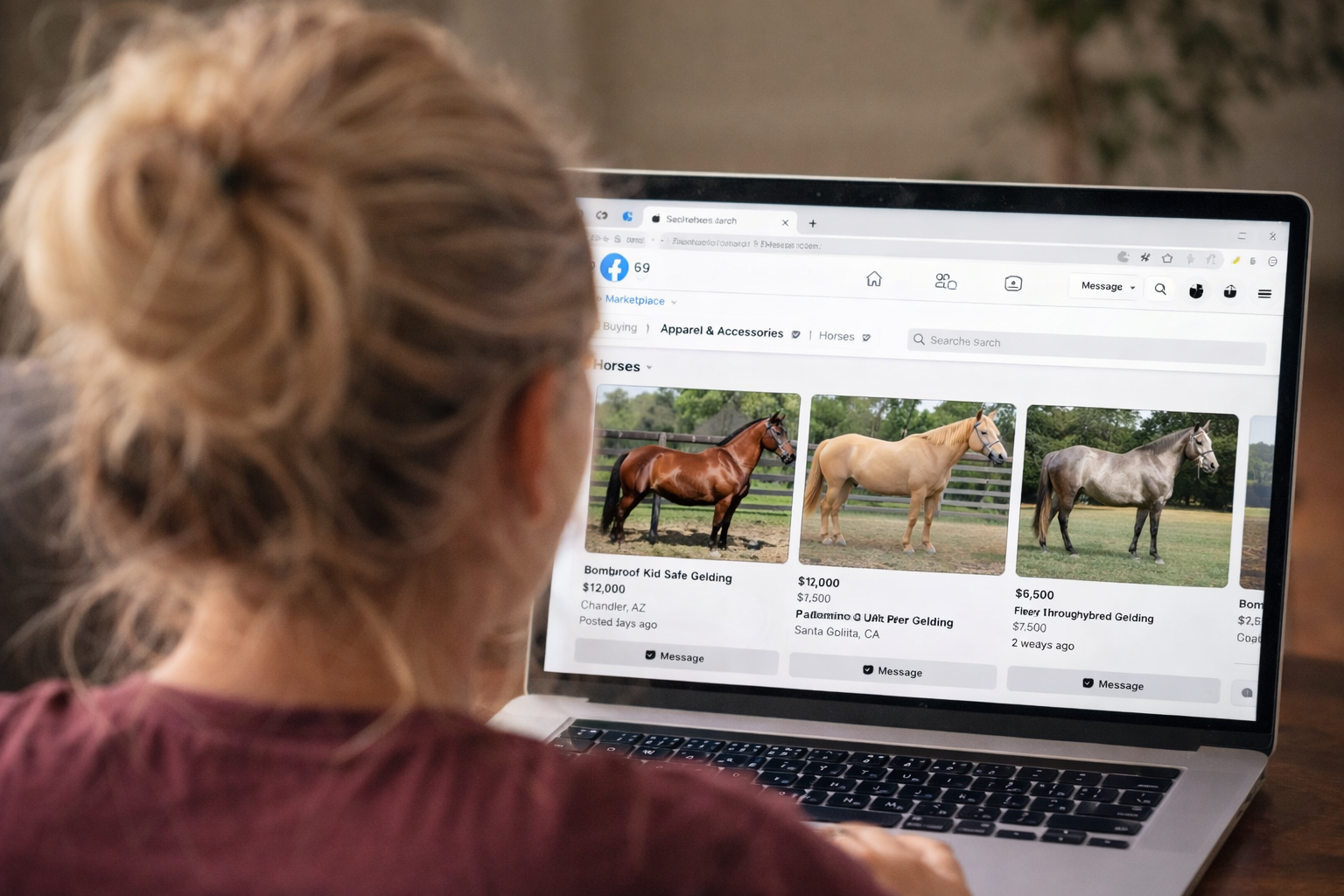

Buying horses and tack online has become the norm for a lot of equestrians. Facebook groups, Instagram, online marketplaces, consignment pages, and even “word of mouth” posts can connect you with incredible horses and quality used equipment—often faster than traditional shopping ever could.
But there’s a downside: the same platforms that make buying easy also make scamming easier. Scammers know horse people are passionate, emotionally invested, and sometimes willing to move quickly when the “right” horse or the “perfect” saddle pops up. They also know many buyers are juggling busy lives and may skip steps they’d normally take in person.
The good news: most scams follow predictable patterns. Once you know what to look for—and you build a simple process you follow every time—you can dramatically reduce your risk.
Why Online Horse & Tack Scams Work So Well
Scammers don’t usually rely on one big lie. They rely on:
- Emotion (“This horse is perfect for you / for your kid / for your goals.”)
- Urgency (“I have 10 messages, first deposit takes him.”)
- Convenience (“I can ship it tomorrow, just pay now.”)
- Plausible stories (moving, divorce, illness, sudden financial hardship)
None of those things automatically mean it’s a scam—but when they’re paired with a refusal to provide verification, that’s when you should pump the brakes.
A real seller expects questions. A scammer tries to make questions feel “rude,” “difficult,” or “unnecessary.”
The Most Common Online Scam Scenarios
1) The Too-Good-To-Be-True Horse Listing
This one often looks like:
- A beautiful horse priced far below market value
- A very polished description but vague details
- Pressure to put down a deposit immediately
- Claims the horse is “ready for anything” with minimal proof
Often, the photos are stolen from a legitimate seller, a breeder’s page, or an old ad. Sometimes the horse exists—but the person listing it has nothing to do with the horse.
2) “Shipping Is Already Set Up”
A scammer may say they have a hauler ready, or they’ll connect you with a “transport company” that needs payment upfront. The transport company is either fake, or the scammer is collecting the payment and disappearing.
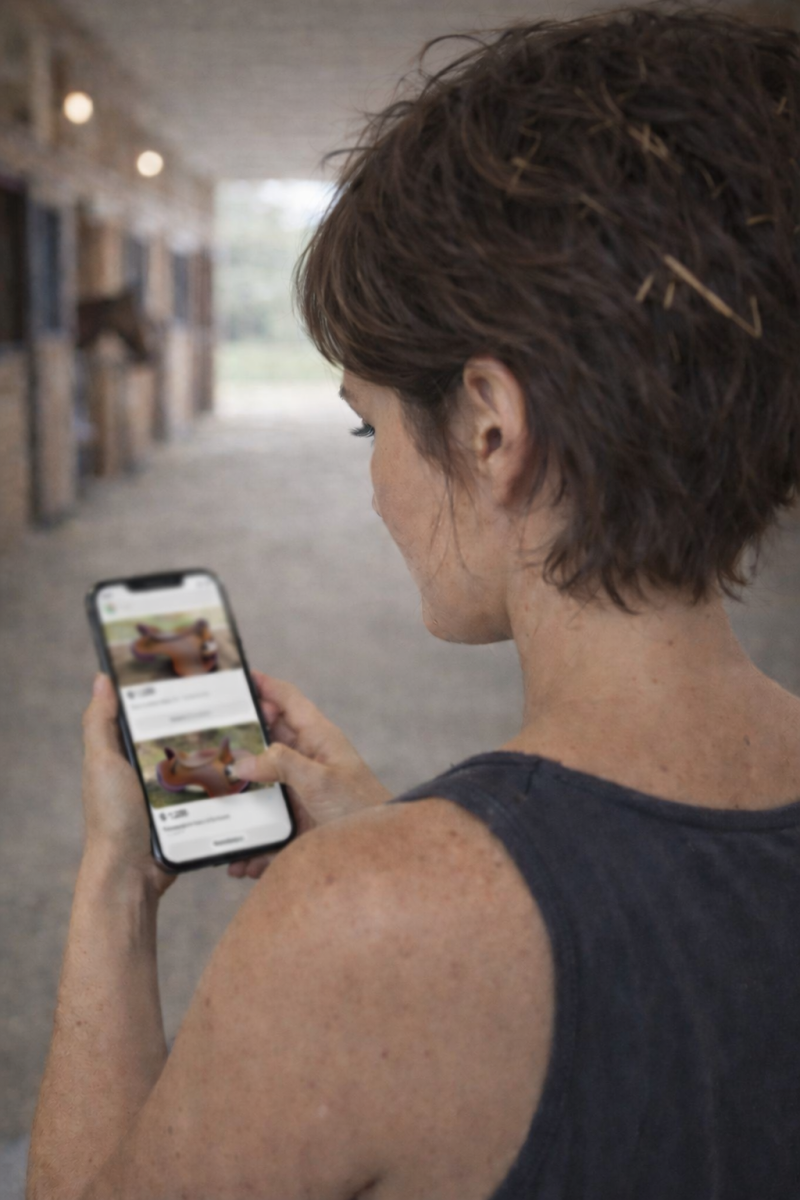
3) The Stolen Tack Photos Listing
This is extremely common with saddles, high-end bridles, and popular brands. They’ll use:
- Clean, professional photos that don’t match the seller’s profile
- A low price that feels like a “score”
- A quick “yes I can ship today” response
- A push for payment methods with no buyer protection
4) The “Deposit to Hold” Trap
Deposits aren’t always bad—many legitimate sellers request them. The problem is when the seller requests a deposit before providing any proof they own the item/horse, or refuses to outline terms in writing.
Red Flags That Deserve Your Full Attention
Think of red flags as “pause signs.” One might be explainable. Several together usually tell you everything you need to know.
Red flags for horses:
- Won’t do a phone call or live video
- Won’t hold a photo with your name and today’s date written on a piece of paper in front of the horse
- Avoids specific questions (soundness, maintenance, training history)
- Changes the story over time (age, location, ownership, price)
- Won’t allow a PPE (pre-purchase exam), or insists you use their vet
- Won’t share papers, brand info, microchip info, or a bill of sale plan
- “Must sell today” pressure, especially paired with a deposit request
Red flags for tack:
- Refuses to send additional photos or measurements
- Listing photos look like a catalog or professional ad
- Price is dramatically below typical resale
- Wants payment via Zelle, wire, gift cards, Venmo, Paypal “friends and family,” etc.
- Won’t provide a simple “proof photo” with a handwritten note
How to Buy a Horse Online Without Getting Burned
Step 1: Verify the Seller Is Real (and Local to the Horse)
Before you fall in love with the horse:
- Look at the seller’s profile: age of account, activity, consistency, if they have any reviews
- Check if the horse’s location matches the seller’s stated location
- Ask how long they’ve owned the horse and why they’re selling
- Request references (trainer, barn manager, veterinarian)
A legit seller will usually have a story that adds up and a network that supports it.
Step 2: Require Fresh Video (Not Just “Good” Video)
Ask for video that proves the horse exists right now and is in the seller’s possession. Good requests include:
- Walking and trotting on hard ground, straight lines both directions
- Picking up all four feet
- Catching the horse in the pasture/stall
- Tacking up (briefly)
- A short clip showing today’s date written on paper in the frame
Step 3: Do a Live Video Call
A live call is one of the best scam filters. Ask to:
- See the horse’s face/markings close up
- Watch the horse move in real time
- See the barn aisle, stall card, or surroundings
- Confirm location and who is handling the horse
If they “can’t” do live video for multiple days in a row, or at all, walk away.
Step 4: PPE With Your Vet (or a Vet You Choose)
A pre-purchase exam is about more than soundness—it’s also a legitimacy checkpoint.
A real seller should be open to:
- A PPE at their facility
- Your vet calling them directly for history/records
- Radiographs or additional diagnostics if needed
If they refuse a PPE entirely, or insist you only use their vet, treat that as a major red flag.
Step 5: Put Everything in Writing
Even for private sales, you want written terms:
- Purchase price and what’s included (tack, papers, etc.)
- Deposit amount (if any) and conditions for refund
- PPE contingency
- Timeline for payment and pickup/shipping
- Bill of sale and transfer details
This protects both buyer and seller—and it prevents “he said/she said” confusion later.
Step 6: Use Payment Methods That Protect You
For large purchases, talk to your bank, use escrow services where appropriate, and avoid unprotected transfers. Scammers love methods that are irreversible.
How to Buy Tack Online Safely (Saddles, Bridles, Blankets, Etc.)
Buying tack online can be totally safe—if you treat verification like a required step, not an optional one.
Ask for “Proof Photos”
Request photos that scammers can’t easily fake:
- The item with a handwritten note showing the date + seller name or your name
- Close-ups of maker stamps, serial numbers, billet wear, gullet, tree points
- A photo of the item next to something specific you request (like a tape measure)
For saddles, always ask for:
- Seat size, tree size, flap length (if English)
- Gullet width and overall fit info if known
- Clear photos of panels and underside
- Any repairs, reflocking, or known damage
Reverse Image Search Every Time
It takes 10 seconds and catches a lot of scams. If you find the same photo tied to a different listing, that’s your sign.
Use Buyer Protection
If the seller refuses protected payment options, ask yourself why. A legitimate seller may prefer certain platforms, but most will work with you if you cover fees.
Confirm Shipping and Returns Up Front
Ask:
- Who pays shipping?
- Do they accept returns? (Many private sellers don’t—just be clear.)
- Will they insure the package?
- Can they provide tracking immediately?
Keep screenshots of the listing and all messages until the item is received and verified.
Extra Safety Tips That Make a Big Difference
- Search the seller’s name + “scam” in horse groups and online
- Ask for a quick voice note—scammers often avoid them
- Don’t let embarrassment keep you quiet—report suspicious listings to group admins
- If a deal feels emotional and rushed, ask a friend to sanity-check it with you
And remember: a good seller will not be offended by reasonable precautions. They’ll usually respect you more for them.
Final Thoughts
The goal isn’t to be paranoid—it’s to be consistent. If you build a simple checklist and follow it every time, you’ll avoid most scams and still be able to find great horses and great tack online.
If you’ve been scammed (or successfully avoided one), share what happened in the comments. The more we talk about these patterns, the harder it becomes for scammers to succeed—and the safer our horse community becomes.

Author: Una
Una moved to Colorado in 2007 and started the Colorado Horse Forum as a way to meet other equestrians in the area. Una now rides and competes in dressage. She operates a small dressage horse breeding program in Castle Rock.


Leave a Reply
You must be logged in to post a comment.