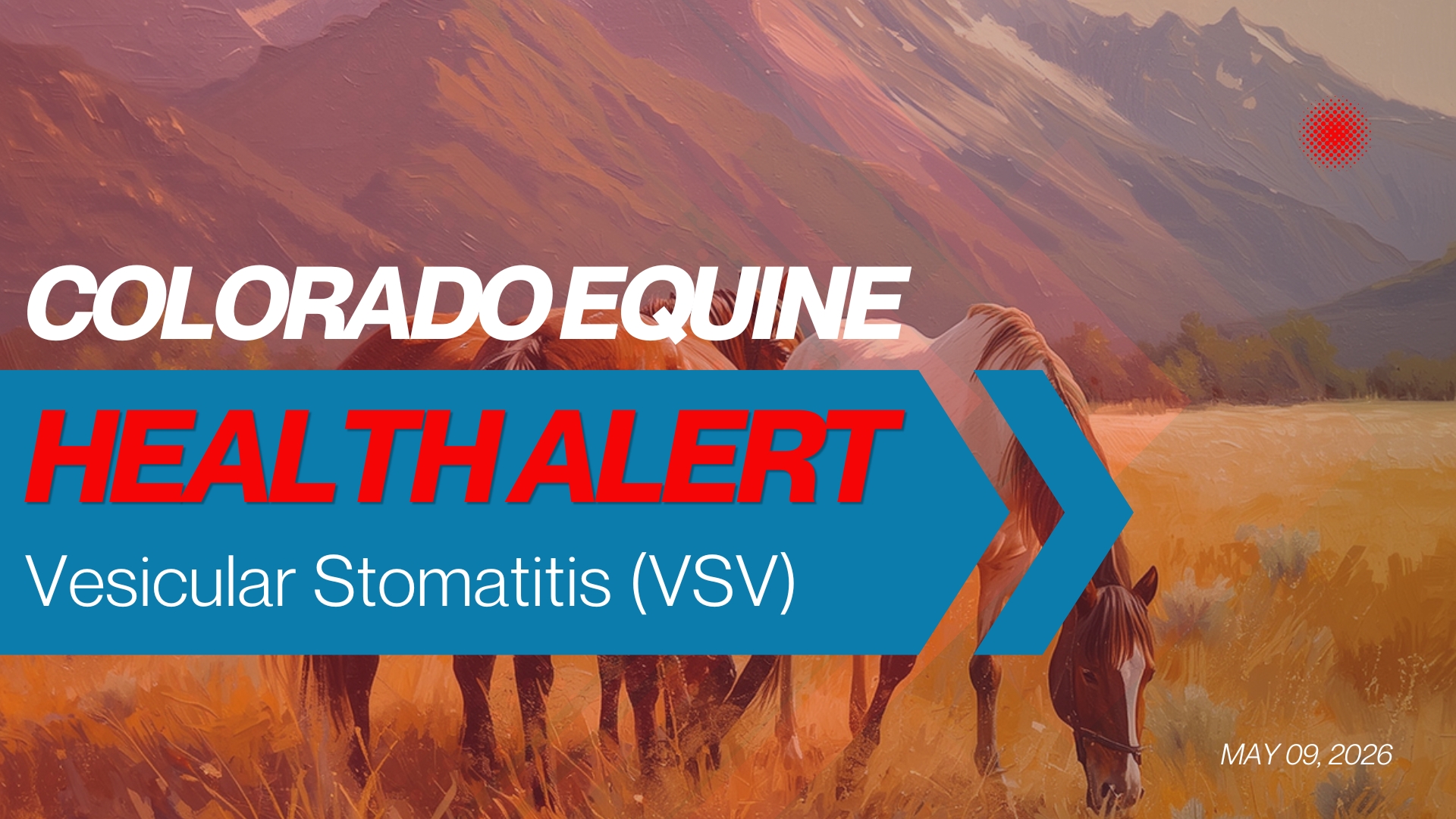

Colorado animal health officials have confirmed a new case of Vesicular Stomatitis (VS or VSV) in Montezuma County, prompting an official quarantine and renewed concern for horse and livestock owners as vector season ramps up.
According to the USDA-APHIS Veterinary Services report released May 8, 2026, the affected Colorado premises is currently the only confirmed location in the state. However, the broader outbreak has now impacted 16 premises across Arizona and Colorado, with equine species being the only animals showing clinical signs so far.
Because Vesicular Stomatitis is spread primarily by biting insects and tends to emerge during warmer months, this announcement serves as an important reminder for Colorado owners to stay alert as fly and midge populations increase.
What Is Vesicular Stomatitis?
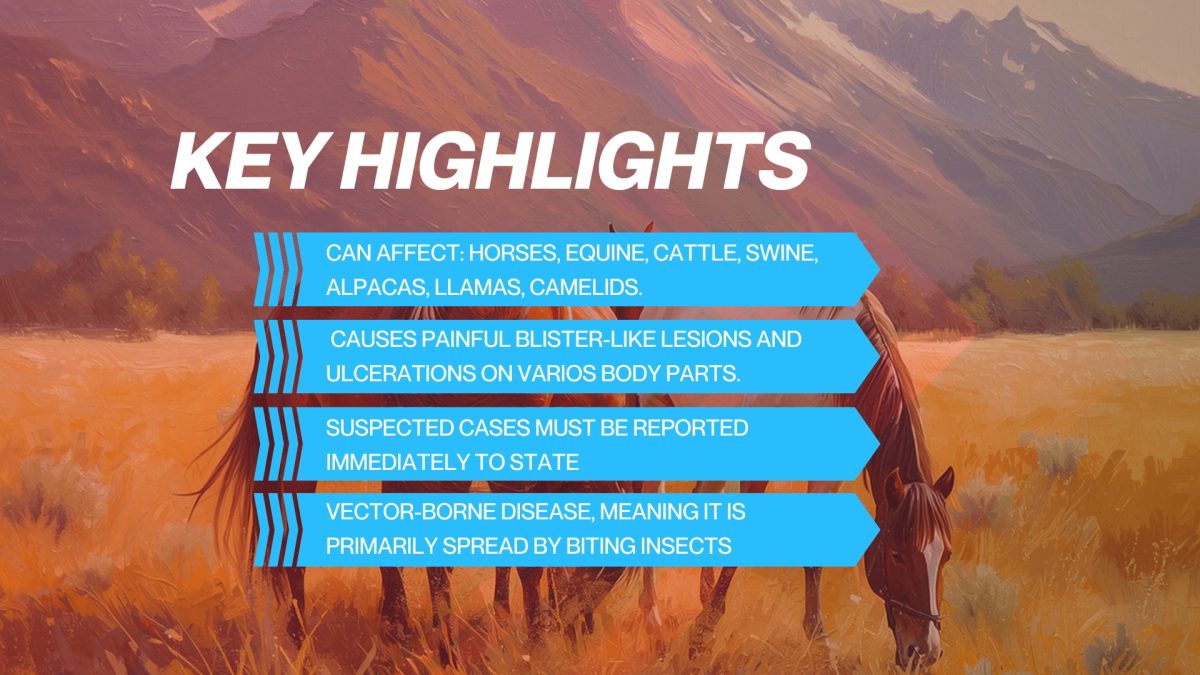
Vesicular Stomatitis is a viral disease that can affect:
- Horses
- Donkeys and mules
- Cattle
- Swine
- New World camelids such as alpacas and llamas
The disease causes painful blister-like lesions and ulcerations, primarily around the mouth and muzzle, but lesions may also appear on the coronary bands, teats, sheath, or ears.
Because the lesions can resemble other serious foreign animal diseases, suspected cases must be reported immediately to state and federal animal health officials.
Current Colorado Situation
Confirmed Colorado Case
- County: Montezuma County
- Outbreak Identifier: 7433
- Alert ID: 4998
- Status: Confirmed positive with official quarantine in place
- Source: USDA-APHIS Veterinary Services
At this time:
- 16 affected premises have been identified between Arizona and Colorado
- Only equine species have shown clinical illness
- Some premises also had cattle and goats present, though they were not clinically affected
Clinical Signs Horse Owners Should Watch For
Clinical signs of Vesicular Stomatitis can vary in severity but often include:
- Blisters or ulcer-like sores on the lips, tongue, nostrils, or muzzle
- Excessive drooling or foamy saliva
- Difficulty eating or chewing feed
- Crusting around the mouth or inside the ears
- Painful lesions around the coronary bands causing lameness
- Sores on the sheath, udder, or teats
- Secondary infections in severe lesions
The tongue is commonly one of the most severely affected areas.
Some horses may initially appear mildly uncomfortable before lesions become obvious.
How Vesicular Stomatitis Spreads
VS is considered a vector-borne disease, meaning it is primarily spread by biting insects such as:
- Midges
- Black flies
- Sand flies
Animals living on pasture or near standing water may face increased exposure risk during warm weather months.
Direct contact with saliva or draining lesions may also contribute to spread between animals.
Why This Disease Matters
Although many horses recover with supportive care, Vesicular Stomatitis can still create major disruptions for owners and facilities.
A confirmed case often results in:
- Immediate quarantine of the premises
- Movement restrictions
- Cancellation of travel or competition plans
- Additional veterinary oversight and testing
Because the lesions resemble those caused by serious foreign animal diseases such as Foot-and-Mouth Disease, every suspected case is treated seriously until laboratory testing confirms the diagnosis.
Diagnosis and Reporting
Veterinarians diagnose suspected VS cases based on clinical signs and laboratory testing. Samples may include:
- Fluid from active lesions
- Blood samples for antibody testing
Colorado veterinarians are legally required to report suspected cases to animal health officials.
Treatment and Recovery
There is currently no specific antiviral treatment for Vesicular Stomatitis.
Most care focuses on:
- Pain management
- Anti-inflammatory medications
- Keeping horses comfortable and hydrated
- Preventing secondary infections
Many horses recover fully, though healing can take time depending on lesion severity.
Biosecurity and Prevention Tips
With warmer weather arriving and insects becoming more active, prevention and early awareness are critical.
Horse and livestock owners should consider:
- Reducing standing water where insects breed
- Using fly control measures aggressively
- Limiting shared water buckets or equipment
- Monitoring horses daily for oral lesions or drooling
- Isolating any animal showing suspicious symptoms
- Contacting a veterinarian immediately if concerns arise
If a case is confirmed, quarantine procedures will be coordinated between the State Veterinarian’s Office and the attending veterinarian.
Stay Informed
Colorado owners can monitor current cases and outbreak updates through the Colorado Department of Agriculture’s Vesicular Stomatitis tracking page.
Horse owners may also find it helpful to review photo references of clinical signs to better recognize potential symptoms early.
Resources
- Colorado Agriculture VSV Tracker:
https://ag.colorado.gov/animal-health/reportable-diseases/vesicular-stomatitis-virus-vsv - Clinical Signs Reference PDF:
https://drive.google.com/file/d/1AWC-7db4_vhlnNqT7TZDQ7Knxj1GoGfy/view
As always, if you notice unusual lesions, excessive drooling, or lameness in your horse, contact your veterinarian promptly. Early reporting and strong biosecurity measures are essential to limiting the spread of Vesicular Stomatitis in Colorado.

Author: Una
Una moved to Colorado in 2007 and started the Colorado Horse Forum as a way to meet other equestrians in the area. Una now rides and competes in dressage. She operates a small dressage horse breeding program in Castle Rock.



Leave a Reply
You must be logged in to post a comment.